Buy bestattungen.eu ?
We are moving the project
bestattungen.eu .
Are you interested in purchasing the domain
bestattungen.eu ?
domain@kv-gmbh.de · 0541-91531010
Buy bestattungen.eu ?
Cremation or burial?
The choice between cremation and burial is a personal one that often depends on cultural, religious, and personal beliefs. Cremation involves the burning of the body, resulting in ashes that can be kept in an urn or scattered in a meaningful location. Burial involves placing the body in a casket and burying it in the ground. Both options have their own traditions and rituals, so it's important to consider what feels most respectful and meaningful to you and your loved ones. **
Burial or cremation?
The choice between burial and cremation is a personal decision that often depends on cultural, religious, and personal beliefs. Burial involves placing the body in the ground, allowing it to decompose naturally, while cremation involves burning the body and reducing it to ashes. Some people choose burial for traditional reasons or to have a physical place to visit, while others choose cremation for environmental reasons or practicality. Ultimately, the decision between burial and cremation should be based on what feels most meaningful and respectful to the deceased and their loved ones. **

Similar search terms for 2020
Top-Angebote
Products related to 2020:
-
Barolo Prunotto 2020Il Barolo firmato dalla cantina Prunotto è un rosso piemontese muscolare, che sin da subito si annuncia come ricco di profumi e di sensazioni ampie. Il Nebbiolo, vitigno utilizzato in purezza per dare vita a questa importante denominazione italiana, si esprime su tipici sentori floreali e fruttati, in grado di evolversi con carattere e personalità nei prossimi anni. Si, perché quest’etichetta, tra i tanti pregi, ha anche quello di poter essere dimenticata in cantina per i prossimi decenni, per essere assaggiata in una versione più complessa. Questo Barolo di Prunotto nasce da un vitigno autoctono a bacca rossa che, all’interno delle Langhe piemontesi, raggiunge apici qualitativi memorabili, il Nebbiolo. Le uve di questa varietà vengono coltivate nella zona di Monforte, Castiglione Falletto e Serralunga, in vigneti caratterizzati da un sottosuolo composto da marne di Sant’Agata. Una volta giunti nei locali adibiti alla vinificazione, gli acini vengono diraspati, per poi fermentare in contenitori d’acciaio, macerando per 10 giorni a una temperatura massima di 30 gradi, svolgendo anche la malolattica. Si procede quindi con la fase dell’affinamento, che si sviluppa in un primo momento per 24 mesi in botti di diversa capacità, e poi, dopo l’imbottigliamento, per altri 12 mesi direttamente in vetro. Il vino Barolo targato Prunotto si svela all’occhio con un colore molto intenso, che richiama la tonalità del granato. Molto appagante il naso, che si orchestra su note coinvolgenti dove fiori e frutta si ergono a protagonisti, aiutati anche grazie a leggere sfumature speziate. All’assaggio è di ottimo corpo, nitido, con un sorso energico e vigoroso, a tratti austero grazie all’evidente trama tannica; termina con un finale persistente, contraddistinto da un retrogusto lievemente amaro. Un grande rosso piemontese, frutto dell’ottimo lavoro effettuato dal team di Prunotto, cantina di proprietà di una delle più importanti famiglie del vino italiano, gli Antinori, che si conferma come una delle realtà di riferimento nell’intero panorama enologico piemontese.45,00 £*Shipping: 48,00 £Secure redirect to the provider
-
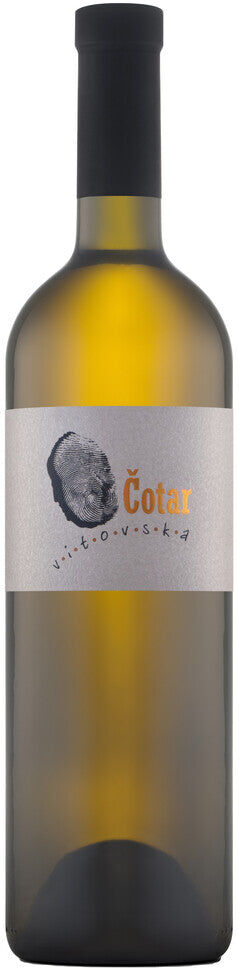
Vitovska Cotar 2020The Vitovska is a typical grape of the border between Friuli and Slovenia, rediscovered a few years for its remarkable potential. This wine, is produced in Slovenian Collio, comes from maceration on the skins for 5 days and, therefore, shows an almost coppery color and aromas definitely evolved and tertiary. For lovers of wine macerated or for those wishing to discover the virtues of the Vitovska Cotar represents a choice absolutely recommended. A wine that can impress, seduce and conquer. On the nose, hints of ripe fruit are interwoven with a scathing minerality typical of the karst area and the border with the Slovenian Collio. In the mouth, the minerality is still dominating the scene and sprinkles a truly remarkable persistence. A wine made from Cotar according to the principles of biodynamic: natural yeasts, total absence of chemicals and respect for nature and its peculiarities. A Vitovska of great value37,00 £*Shipping: 48,00 £Secure redirect to the provider
-
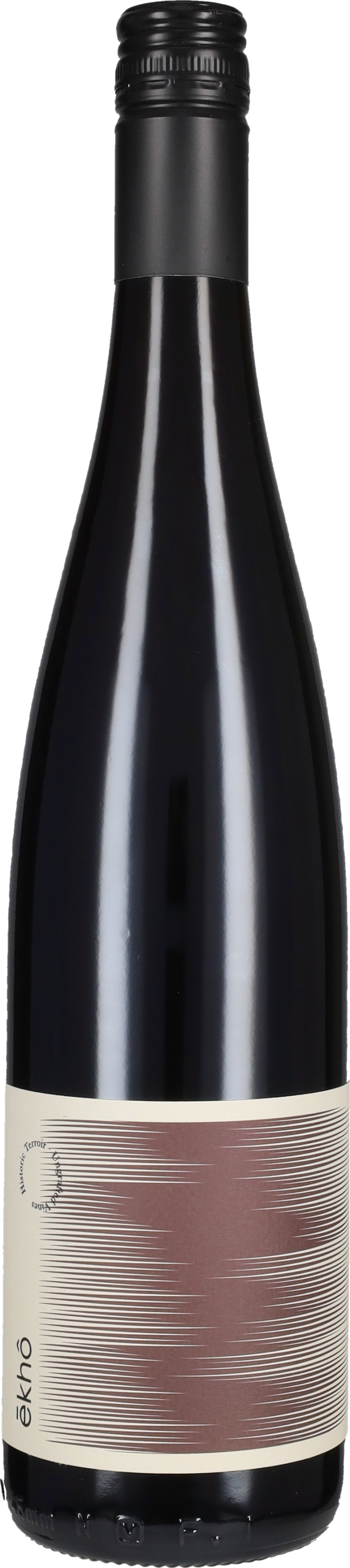
Red Ekho 2020The Ekho Red represents adynamic and spicy interpretation of a single old vineyard located on the island of Lemnos in the North Aegean Sea. The Greek oenologist Lefteris Anagnostou, the soul of the Ekho project, is committed to the recovery and valorisation of old vineyards scattered in historic wine-growing areas of Greece, thus emphasising indigenous varieties and ancient oenological traditions. In this particular case, Ekho Red is a pure expression of the Limnio grape, an indigenous grape from the island of Limnos that can boast a history stretching back thousands of years, being mentioned by illustrious ancient Greek personalities such as the philosopher Aristotle and the poet Homer.Ekho Rosso is a 100% Limnio from vines over 80 years old grown on the island of Limnos on sandy soils of volcanic origin. Following the harvest, which is carried out entirely by hand, the grapes are mellowed in stainless steel tanks, where alcoholic fermentation takes place spontaneously through the action of indigenous yeasts alone, combined with a variable period of maceration on the skins. Once the fermentation process is complete, 60% of the mass is decanted into third-passage 300-litre wooden barrels and the remaining 40% into steel, containers in which the 20-month ageing phase takes place. The final release on the market takes place not before a further adequate rest in the bottle, with a total production of just 580 examples.In the glass, the Rosso Ekho exhibits a luminous ruby red mantle. The olfactory panorama is described by fruity hints of pomegranate and cherry that blend with aromas of ripe tomato and spicy hints of black pepper and nutmeg. Taste development of good structure and juicy freshness, endowed with a fine tannic texture that accompanies the dynamic and tasty closure, with considerable momentum.36,00 £*Shipping: 48,00 £Secure redirect to the provider
-
White Halarà 2020The Bianco from the artisanal project Halarà represents an interpretation of Catarratto with an energetic and saline taste, son of the Marsala territory. In this area on the western tip of Sicily, Catarratto is one of the most important varieties, appreciated for its ability to maintain a certain level of acidity even in the hottest years. It is one of the oldest vines on the entire island, skilfully enhanced by the team of artisanal vine growers involved in the Halarà project, whose aim with this dry oxidative-style version is to recover the ancient traditions of the Marsala area.Halarà Bianco is a 100% Catarratto from vines about 40 years old planted on clayey-calcareous soils with northern exposure. The vines, bush-trained using practices highly respectful of the environment, are located in the Abbadessa district, inland from Marsala. The grapes are harvested entirely by hand and in the cellar the bunches undergo a slow pressing, aimed at partial oxidation of the must. This is followed by spontaneous alcoholic fermentation in stainless steel tanks and then maturation for several months on the fine lees, partly in chestnut wood barrels and partly again in steel. The final release takes place no earlier than a further long resting period in the bottle.Halarà's Catarratto Bianco has an intense golden yellow hue. The deep aromatic context highlights hints of ripe apple, peach in syrup, thyme, almond and dried jasmine, enriched by hints of honey and flint and oxidative tones reminiscent of walnut. On the palate it stands out for its citrus freshness and strong savoury timbre, elements that contribute to the energetic tension of the progression anticipating the complex and persistent finish.35,00 £*Shipping: 48,00 £Secure redirect to the provider


-
What is better: cremation or burial?
The decision between cremation and burial is a personal one and depends on individual beliefs, traditions, and preferences. Cremation is often seen as more environmentally friendly and cost-effective, while burial is considered to be a more traditional and culturally significant practice for many people. Ultimately, the choice between cremation and burial should be based on what feels most meaningful and respectful for the deceased and their loved ones. **
-
Is it necessary to wear black clothing to a funeral, urn burial, or memorial service?
While wearing black clothing to a funeral, urn burial, or memorial service is a traditional sign of mourning in many cultures, it is not always necessary. It is more important to dress in a respectful and modest manner, choosing attire that is appropriate for the solemnity of the occasion. Dark, subdued colors are generally preferred, but other options such as dark grey, navy, or dark green can also be suitable. Ultimately, the most important thing is to show your respect for the deceased and their loved ones through your presence and demeanor. **
-
What is a cremation grave slab?
A cremation grave slab is a flat stone marker that is placed on top of a burial plot where cremated remains are interred. It serves as a memorial and a way to mark the location of the cremated remains. The grave slab may be inscribed with the name, dates, and other details of the deceased, providing a lasting tribute to their memory. These grave slabs come in various materials and designs, and are often personalized to reflect the individual being commemorated. **
-
Why is a coffin used for burial or cremation?
A coffin is used for burial or cremation to provide a dignified and respectful way to lay a loved one to rest. It serves as a container to hold the body during the funeral service and burial process. Additionally, a coffin helps to protect the body and provide a sense of closure for the family and friends of the deceased. It also symbolizes the transition from life to death and is a common cultural practice in many societies. **

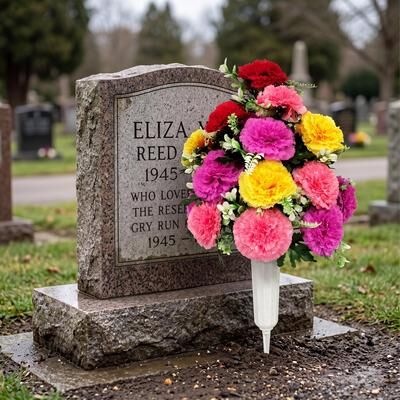
Where do the flowers go in a cremation burial?
During a cremation burial, any flowers that are placed on top of the casket or around the cremation urn will typically be cremated along with the deceased. The flowers will be consumed by the intense heat of the cremation process and become part of the ashes. This allows the flowers to be a part of the final resting place of the deceased, symbolizing love, respect, and remembrance. **
What do you think is better: burial or cremation?
The choice between burial and cremation is a deeply personal one and depends on individual beliefs, traditions, and preferences. Burial allows for a physical place for loved ones to visit and can be comforting for some. On the other hand, cremation can be more environmentally friendly and may be preferred by those who do not want to take up space in a cemetery. Ultimately, the decision should be based on what feels most respectful and meaningful for the individual and their loved ones. **
Top-Angebote
Products related to 2020:
-
GARVEE Artificial Chrysanthemum Cemetery Flowers with Vase & Ground Spikes–Outdoor Memorial Grave Decor for HeadstonesComplete cemetery flower set includes a 21-inch artificial carnation bouquet with 10 lifelike blooms and a durable vase with a 2.8-inch ground spike for secure outdoor placement.54,52 $*Shipping: 0,00 $Secure redirect to the provider
-
Garvee Artificial Carnation Cemetery Flowers for Grave Decorations,Artificial Carnation Bouquet【Carnation Memorial Arrangement】This set includes an artificial carnation bouquet arranged with lifelike greenery and accent flowers, creating a respectful floral tribute for a loved one’s resting place.39,61 $*Shipping: 0,00 $Secure redirect to the provider
-
Barolo Prunotto 2020Il Barolo firmato dalla cantina Prunotto è un rosso piemontese muscolare, che sin da subito si annuncia come ricco di profumi e di sensazioni ampie. Il Nebbiolo, vitigno utilizzato in purezza per dare vita a questa importante denominazione italiana, si esprime su tipici sentori floreali e fruttati, in grado di evolversi con carattere e personalità nei prossimi anni. Si, perché quest’etichetta, tra i tanti pregi, ha anche quello di poter essere dimenticata in cantina per i prossimi decenni, per essere assaggiata in una versione più complessa. Questo Barolo di Prunotto nasce da un vitigno autoctono a bacca rossa che, all’interno delle Langhe piemontesi, raggiunge apici qualitativi memorabili, il Nebbiolo. Le uve di questa varietà vengono coltivate nella zona di Monforte, Castiglione Falletto e Serralunga, in vigneti caratterizzati da un sottosuolo composto da marne di Sant’Agata. Una volta giunti nei locali adibiti alla vinificazione, gli acini vengono diraspati, per poi fermentare in contenitori d’acciaio, macerando per 10 giorni a una temperatura massima di 30 gradi, svolgendo anche la malolattica. Si procede quindi con la fase dell’affinamento, che si sviluppa in un primo momento per 24 mesi in botti di diversa capacità, e poi, dopo l’imbottigliamento, per altri 12 mesi direttamente in vetro. Il vino Barolo targato Prunotto si svela all’occhio con un colore molto intenso, che richiama la tonalità del granato. Molto appagante il naso, che si orchestra su note coinvolgenti dove fiori e frutta si ergono a protagonisti, aiutati anche grazie a leggere sfumature speziate. All’assaggio è di ottimo corpo, nitido, con un sorso energico e vigoroso, a tratti austero grazie all’evidente trama tannica; termina con un finale persistente, contraddistinto da un retrogusto lievemente amaro. Un grande rosso piemontese, frutto dell’ottimo lavoro effettuato dal team di Prunotto, cantina di proprietà di una delle più importanti famiglie del vino italiano, gli Antinori, che si conferma come una delle realtà di riferimento nell’intero panorama enologico piemontese.45,00 £*Shipping: 48,00 £Secure redirect to the provider
-
Vitovska Cotar 2020The Vitovska is a typical grape of the border between Friuli and Slovenia, rediscovered a few years for its remarkable potential. This wine, is produced in Slovenian Collio, comes from maceration on the skins for 5 days and, therefore, shows an almost coppery color and aromas definitely evolved and tertiary. For lovers of wine macerated or for those wishing to discover the virtues of the Vitovska Cotar represents a choice absolutely recommended. A wine that can impress, seduce and conquer. On the nose, hints of ripe fruit are interwoven with a scathing minerality typical of the karst area and the border with the Slovenian Collio. In the mouth, the minerality is still dominating the scene and sprinkles a truly remarkable persistence. A wine made from Cotar according to the principles of biodynamic: natural yeasts, total absence of chemicals and respect for nature and its peculiarities. A Vitovska of great value37,00 £*Shipping: 48,00 £Secure redirect to the provider
-
Cremation or burial?
The choice between cremation and burial is a personal one that often depends on cultural, religious, and personal beliefs. Cremation involves the burning of the body, resulting in ashes that can be kept in an urn or scattered in a meaningful location. Burial involves placing the body in a casket and burying it in the ground. Both options have their own traditions and rituals, so it's important to consider what feels most respectful and meaningful to you and your loved ones. **
-
Burial or cremation?
The choice between burial and cremation is a personal decision that often depends on cultural, religious, and personal beliefs. Burial involves placing the body in the ground, allowing it to decompose naturally, while cremation involves burning the body and reducing it to ashes. Some people choose burial for traditional reasons or to have a physical place to visit, while others choose cremation for environmental reasons or practicality. Ultimately, the decision between burial and cremation should be based on what feels most meaningful and respectful to the deceased and their loved ones. **
-
What is better: cremation or burial?
The decision between cremation and burial is a personal one and depends on individual beliefs, traditions, and preferences. Cremation is often seen as more environmentally friendly and cost-effective, while burial is considered to be a more traditional and culturally significant practice for many people. Ultimately, the choice between cremation and burial should be based on what feels most meaningful and respectful for the deceased and their loved ones. **
-
Is it necessary to wear black clothing to a funeral, urn burial, or memorial service?
While wearing black clothing to a funeral, urn burial, or memorial service is a traditional sign of mourning in many cultures, it is not always necessary. It is more important to dress in a respectful and modest manner, choosing attire that is appropriate for the solemnity of the occasion. Dark, subdued colors are generally preferred, but other options such as dark grey, navy, or dark green can also be suitable. Ultimately, the most important thing is to show your respect for the deceased and their loved ones through your presence and demeanor. **
Similar search terms for 2020
-
Red Ekho 2020The Ekho Red represents adynamic and spicy interpretation of a single old vineyard located on the island of Lemnos in the North Aegean Sea. The Greek oenologist Lefteris Anagnostou, the soul of the Ekho project, is committed to the recovery and valorisation of old vineyards scattered in historic wine-growing areas of Greece, thus emphasising indigenous varieties and ancient oenological traditions. In this particular case, Ekho Red is a pure expression of the Limnio grape, an indigenous grape from the island of Limnos that can boast a history stretching back thousands of years, being mentioned by illustrious ancient Greek personalities such as the philosopher Aristotle and the poet Homer.Ekho Rosso is a 100% Limnio from vines over 80 years old grown on the island of Limnos on sandy soils of volcanic origin. Following the harvest, which is carried out entirely by hand, the grapes are mellowed in stainless steel tanks, where alcoholic fermentation takes place spontaneously through the action of indigenous yeasts alone, combined with a variable period of maceration on the skins. Once the fermentation process is complete, 60% of the mass is decanted into third-passage 300-litre wooden barrels and the remaining 40% into steel, containers in which the 20-month ageing phase takes place. The final release on the market takes place not before a further adequate rest in the bottle, with a total production of just 580 examples.In the glass, the Rosso Ekho exhibits a luminous ruby red mantle. The olfactory panorama is described by fruity hints of pomegranate and cherry that blend with aromas of ripe tomato and spicy hints of black pepper and nutmeg. Taste development of good structure and juicy freshness, endowed with a fine tannic texture that accompanies the dynamic and tasty closure, with considerable momentum.36,00 £*Shipping: 48,00 £Secure redirect to the provider
-
White Halarà 2020The Bianco from the artisanal project Halarà represents an interpretation of Catarratto with an energetic and saline taste, son of the Marsala territory. In this area on the western tip of Sicily, Catarratto is one of the most important varieties, appreciated for its ability to maintain a certain level of acidity even in the hottest years. It is one of the oldest vines on the entire island, skilfully enhanced by the team of artisanal vine growers involved in the Halarà project, whose aim with this dry oxidative-style version is to recover the ancient traditions of the Marsala area.Halarà Bianco is a 100% Catarratto from vines about 40 years old planted on clayey-calcareous soils with northern exposure. The vines, bush-trained using practices highly respectful of the environment, are located in the Abbadessa district, inland from Marsala. The grapes are harvested entirely by hand and in the cellar the bunches undergo a slow pressing, aimed at partial oxidation of the must. This is followed by spontaneous alcoholic fermentation in stainless steel tanks and then maturation for several months on the fine lees, partly in chestnut wood barrels and partly again in steel. The final release takes place no earlier than a further long resting period in the bottle.Halarà's Catarratto Bianco has an intense golden yellow hue. The deep aromatic context highlights hints of ripe apple, peach in syrup, thyme, almond and dried jasmine, enriched by hints of honey and flint and oxidative tones reminiscent of walnut. On the palate it stands out for its citrus freshness and strong savoury timbre, elements that contribute to the energetic tension of the progression anticipating the complex and persistent finish.35,00 £*Shipping: 48,00 £Secure redirect to the provider
-
Turriga Argiolas 2020Argiolas' Turriga is a legendary red, a symbol of Sardinia, which is able, like few other bottles, to capture the beauty and richness of the land around Cagliari and immortalise it faithfully inside the bottle. In short, drinking Turriga means drinking a piece of Sardinia and a piece of Sardinian wine history. It is an exemplary expression of prestigious elegance and class, which over the years has always been able to confirm itself as one of the most representative Italian reds, carving out a place for itself among the stars of our peninsula's oenological stage. Underneath the incredible combination of strength, balance and finesse are the great tradition of the Argiolas winery and the talent of Giacomo Tachis, one of the most authoritative and recognised signatures of Italian oenology and the man who found the perfect formula to give life to the prestigious Sassicaia and Tignanello. Argiolas Turriga comes from the selection of the best grapes from the estate of the same name, located in Selegas. It is made exclusively from indigenous grapes, mostly Cannonau with a dash of Carignano, Bovale and Malvasia Nera, from old vines resting on calcareous soil, rich in stones and pebbles. We are about 230 metres above sea level, where the sea breezes cradle the vines and the Mediterranean sun ensures perfect ripening of the grapes. The grapes are harvested by hand between October and November and delicately transported to the cellar where a careful and decisive selection takes place. The grape juice obtained ferments in steel containers and macerates on its skins for between 16 and 18 months. Maturation ends in new French oak barriques where it remains for almost 24 months before resting another year in the bottle. The Turriga wine presents itself with a noble dress tinged with ruby red and edged with garnet tones. The nose sends out intense and seductive odorous messages: it begins with forest fruit in all its forms, jam, in spirit, in syrup and jam. Spicy and aromatic herb scents then gradually emerge, evoking notes of Mediterranean scrub. It closes on evolved and roasted sensations of cocoa, tobacco and coffee framed by whiffs of incense and menthol. On the palate it delivers what it promised, revealing its expressive power, round and warm, enveloping the palate with a distinct elegance, taking leave in a prolonged and articulate finish. A profound wine that touches the heartstrings and lingers in the memory.95,00 £*Shipping: 48,00 £Secure redirect to the provider
-
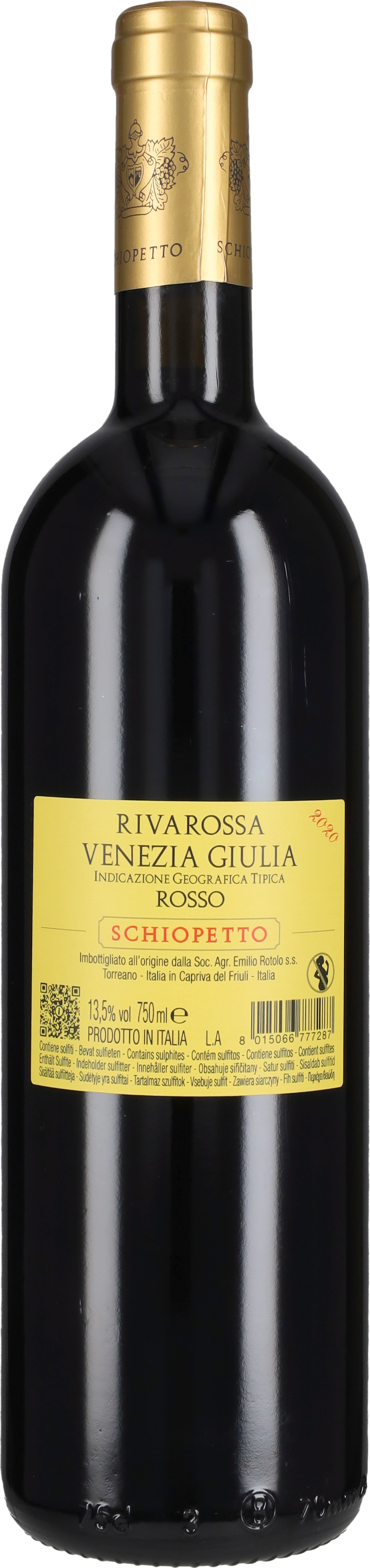
Rivarossa Schiopetto 2020Il “Rivarossa” di Schiopetto è un classico taglio bordolese in terra friulana prodotto con Cabernet Sauvignon e Merlot. È un vino storico della cantina, che mette in luce l’alto livello qualitativo che possono raggiungere i vitigni d’origine francese nella regione dei Colli Orientali e le peculiarità di un terroir straordinario, tra i più vocati in assoluto per la viticoltura. Un rosso intenso, ricco e complesso che unisce in perfetta sintesi le caratteristiche varietali, con le note minerali tipiche della “ponca” friulana. Il vino “Rivarossa” nasce nel Cru Oleis della tenuta di Mario Schiopetto. Si tratta di un appezzamento di 8 ettari situato nella splendida area collinare dei Colli Orientali, dedicato soprattutto alla coltivazione delle uve a bacca rossa. I terreni di matrice calcareo-argillosa si sono rivelati perfetti per il Cabernet Sauvignon e il Merlot, che possono anche contare su un clima soleggiato, fresco e sempre ventilato. Le uve sono vendemmiate a mano nella seconda metà di settembre. Le fermentazioni si svolgono separatamente in tini di legno a una temperatura di 25 °C e con una durata della macerazione sulle bucce di 10-15 giorni. I vini maturano poi per 14 mesi in barrique da 225 e tonneau da 500 litri di rovere francese, prima che si proceda all’assemblaggio finale. Il vino completa il suo affinamento con 12 mesi in bottiglia. Il “Rivarossa” della cantina di Mario Schiopetto è un interessante etichetta di stampo bordolese prodotta in Friuli Venezia Giulia, che riesce ad esprimere attraverso uve internazionali le caratteristiche più tipiche delle terre friulane. Il vino si presenta con un colore rubino scuro, con riflessi luminosi. Al naso regala aromi di amarena, piccoli frutti a bacca rossa, sentori di radice di liquirizia, spezie, pepe nero e tabacco. Al palato ha una buona struttura, con una trama tannica fitta, evoluta ed elegante. Gli aromi sono armoniosi e raffinati, con un finale fresco e minerale, che richiama le caratteristiche peculiari del terroir.18,00 £*Shipping: 48,00 £Secure redirect to the provider
-
What is a cremation grave slab?
A cremation grave slab is a flat stone marker that is placed on top of a burial plot where cremated remains are interred. It serves as a memorial and a way to mark the location of the cremated remains. The grave slab may be inscribed with the name, dates, and other details of the deceased, providing a lasting tribute to their memory. These grave slabs come in various materials and designs, and are often personalized to reflect the individual being commemorated. **
-
Why is a coffin used for burial or cremation?
A coffin is used for burial or cremation to provide a dignified and respectful way to lay a loved one to rest. It serves as a container to hold the body during the funeral service and burial process. Additionally, a coffin helps to protect the body and provide a sense of closure for the family and friends of the deceased. It also symbolizes the transition from life to death and is a common cultural practice in many societies. **
-
Where do the flowers go in a cremation burial?
During a cremation burial, any flowers that are placed on top of the casket or around the cremation urn will typically be cremated along with the deceased. The flowers will be consumed by the intense heat of the cremation process and become part of the ashes. This allows the flowers to be a part of the final resting place of the deceased, symbolizing love, respect, and remembrance. **
-
What do you think is better: burial or cremation?
The choice between burial and cremation is a deeply personal one and depends on individual beliefs, traditions, and preferences. Burial allows for a physical place for loved ones to visit and can be comforting for some. On the other hand, cremation can be more environmentally friendly and may be preferred by those who do not want to take up space in a cemetery. Ultimately, the decision should be based on what feels most respectful and meaningful for the individual and their loved ones. **
* All prices are inclusive of VAT and, if applicable, plus shipping costs. The offer information is based on the details provided by the respective shop and is updated through automated processes. Real-time updates do not occur, so deviations can occur in individual cases. ** Note: Parts of this content were created by AI.